Overcoming Anger and Violence
It doesn't take much to see that we live in an increasingly angry world. Public conversations quickly become arguments. Small disagreements escalate into personal attacks. Road rage, workplace confrontations, family conflicts, and even random acts of violence seem far more common than they once did. Social media has only amplified the problem, making it easier than ever for people to vent their frustrations without restraint.
This raises an important question. Why are people becoming so angry? More importantly, is violence simply part of human nature?
Some people argue that human beings are instinctively aggressive and simply need healthy outlets for their anger. According to this view, sports, competitive activities, or even violent entertainment allow people to release their aggressive impulses in harmless ways.
I find that explanation unconvincing.
The more I have reflected on the nature of anger and violence, the more I have come to believe that violence is not the result of some uncontrollable instinct for "blood lust." Instead, it is usually the final expression of our desire to have life go our way.
Think about how early this begins.
As children, we become angry when we can't control our toys, our siblings, our parents, or the circumstances around us. When we don't get what we want, we throw tantrums, scream, cry, or lash out.
Most adults simply develop more sophisticated versions of the same behavior.
After a frustrating day at work we snap at our spouse or children. We curse at the driver who cuts us off in traffic. We belittle someone who disagrees with us. Sometimes those emotional reactions escalate into threats or physical violence.
In many cases, our anger isn't really about what the other person has done. It grows out of our frustration that we cannot control the people and events around us.
Viewed from that perspective, violence becomes the ultimate expression of selfishness. It says, If I can't have things my way, then I will force them to be my way.
That attitude stands in direct opposition to love. Love seeks relationship. Violence seeks control.
Why Does Violence Feel So Powerful?
If violence is so destructive, why does it seem so satisfying in the moment?
Perhaps because, for a brief instant, violence gives us the illusion of power.
When anger takes over, we feel strong. We imagine that we are finally taking charge. We convince ourselves that we are dispensing justice - that we are giving another person exactly what they deserve.
If we can’t make life the way we want it, then we will destroy life in some way and show that we have ultimate power. There is no compromise, life will be our way or no way. And, unfortunately, it generally winds up being no way.
But beneath that illusion often lies something much more uncomfortable.
Fear.
Helplessness.
The painful realization that we cannot control life.
Violence promises control, but it never delivers it. Instead, it damages relationships, destroys trust, and often creates consequences that last far longer than the original conflict.
Ironically, the person we are usually trying to overpower is not someone else at all. It is our own fear of being powerless.
Is Violence Ever the Answer?
There are certainly situations in which force may be necessary to protect innocent life or prevent greater harm. Yet those exceptional circumstances should never cause us to believe that anger itself is a reliable guide for our actions.
Jesus understood something profound about human nature when he taught that violence ultimately produces more violence.
"If anyone strikes you on the right cheek, turn and offer him your left also."
"Whatever you deal out to others will be dealt back to you."
"Love your enemies."
These teachings are not expressions of weakness. They are invitations to break the endless cycle of retaliation.
Even the familiar phrase, "an eye for an eye," was never intended to encourage revenge. In its original context, it was meant to limit retaliation, preventing violence from escalating beyond the original offense.
Love interrupts the cycle. Violence perpetuates it.
The Real Cause of Violence And The Remedy
I have become convinced that anger-driven violence - whether verbal, emotional, or physical -is not something that simply happens to us.
It is a choice.
It is the choice to put our own desires above the well-being of another person.
It is the decision to value control more than relationship.
It is selfishness in its most destructive form.
If selfishness lies at the heart of violence, then the remedy must begin with its opposite.
Concern for others.
Compassion.
Humility.
The willingness to accept that we cannot control every circumstance or every person we encounter.
Maturity teaches us that not every disagreement needs to be won, not every insult deserves a response, and not every frustration requires an outlet.
The strongest people are rarely the loudest or the most intimidating. They are the ones who possess enough inner strength to master their own anger before it masters them.
In the end, violence is not overcome by greater force. It is overcome when people choose love over control, compassion over selfishness, and relationship over the need to be right.
That is not the easier path.
But it is the only path that ultimately leads to peace.
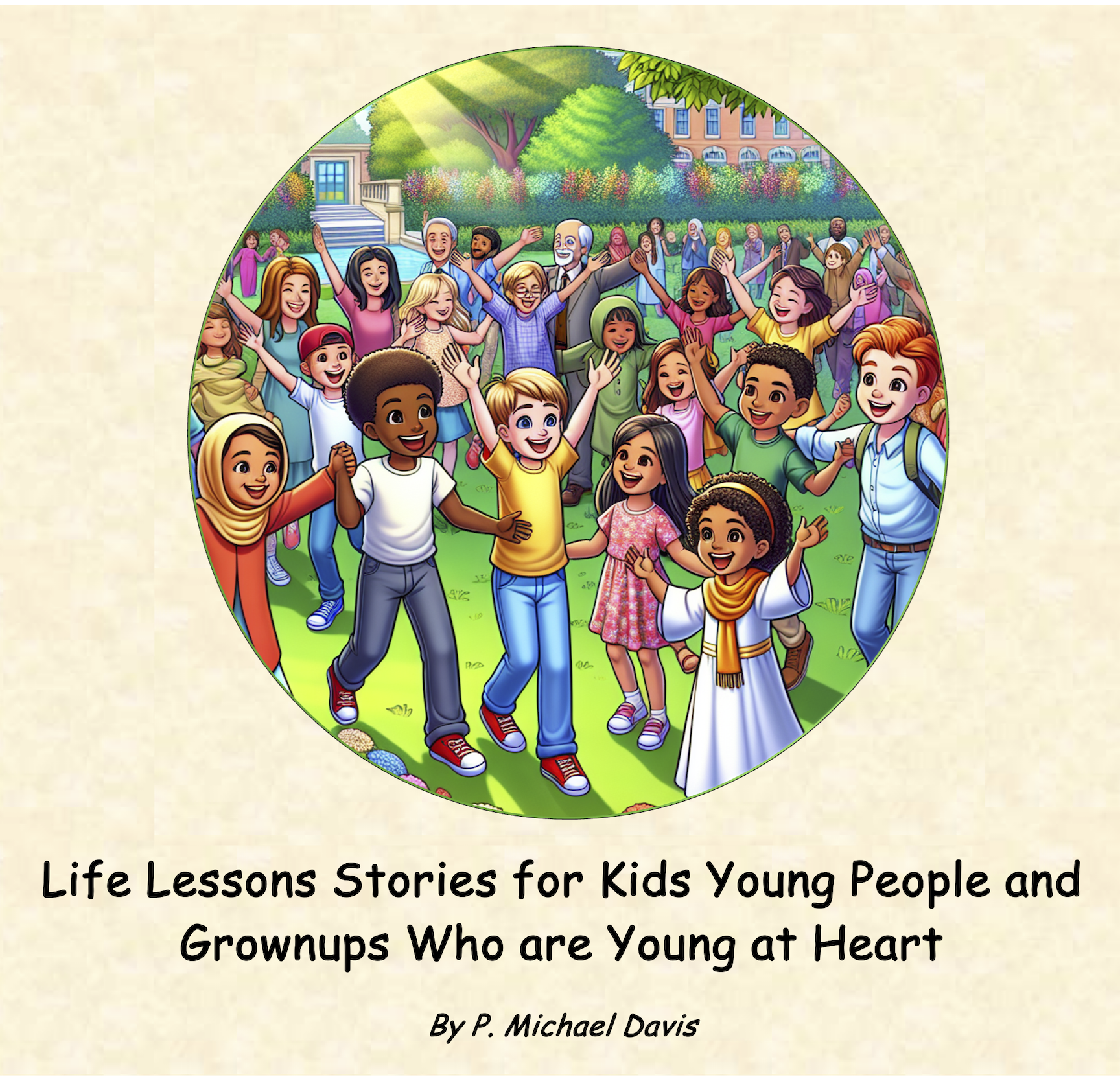
Life Lessons Stories for Kids Young People and Grownups Who are Young at Heart
By P. Michael Davis
This original collection of enjoyable, entertaining, and inspirational stories communicates positive values and principles for happy and healthy living without being preachy, teachy, or boring. By bringing an assortment of unique, interesting, and appealing characters to life in these delightful tales, P. Michael Davis opens the gate into a world where things like kindness, compassion, hope, and perseverance live and thrive. He also clearly communicates important truths about how kids, young people, and grownups can build positive relationships and live in a meaningful and fulfilling way.
Please click the image above for more info and to buy this book.