How Do Our Relationships Become Spiritual?

A spiritual relationship is not something that exists only between us and God. In fact, I think one of the clearest ways we begin to understand God is through the relationships we have with other people.
When we build relationships that are positive, open, honest, healthy, and life-giving—whether those relationships are with friends, family members, co-workers, children, a spouse or loving partner, or simply people who cross our path—we begin to see something of what God's love looks like.
Why?
Because healthy relationships give us a place to practice the very things we have been talking about.
We learn to listen.
We learn to be honest.
We learn to forgive.
We learn to be patient.
We learn to care about someone else's needs.
We learn to accept people as they are while still encouraging them to grow.
And as we learn to do those things with other people, we begin to understand more deeply what it means to have a relationship with God.
It works in the other direction, too.
As our relationship with God becomes deeper and more real, it begins to change the way we relate to other people.
We begin to see people differently.
Instead of seeing someone simply as an obstacle, an annoyance, a competitor, or someone who happens to disagree with us, we begin to see another human being who is just as deeply loved by God as we are.
That doesn't mean we will suddenly like everyone.
Let's be honest.
There are still going to be people who irritate us.
There will be people we disagree with.
There will be people who hurt us.
There may even be people we need to keep at a healthy distance.
A spiritual relationship doesn't require us to pretend that everything is okay when it isn't.
What it does is give us a different way of responding.
We can begin asking, "How can I respond to this person in a way that is consistent with God's love?"
That is a very different question from, "How can I get even?"
And that is where our relationships can actually become spiritual.
Our friendships can become spiritual.
Our family relationships can become spiritual.
Our relationships at work can become spiritual.
Romantic relationships can become spiritual.
Marriage can become spiritual.
Parenting can become spiritual.
Even brief encounters with people we may never see again can become opportunities to practice the love and compassion we are learning through our relationship with God.
In that sense, our entire life becomes part of our spiritual journey.
And something else happens along the way.
As we learn to love and care for other people, we become a living example of what God's love looks like.
We don't have to preach a sermon.
We don't have to explain theology.
We don't even have to mention God at all.
Sometimes the most powerful way we communicate God's love is simply by the way we treat someone.
Listening when someone needs to be heard.
Offering forgiveness when we could just as easily hold a grudge.
Showing patience when someone is struggling.
Helping someone who needs help.
Giving another person the benefit of the doubt.
Standing beside someone who feels alone.
Sometimes those simple acts of love say more about God than all the words we could possibly speak.
And this is why I believe our relationships are such an important part of spiritual growth.
We don't grow spiritually simply by thinking about God.
We grow by practicing what we are learning about God in the way we live.
Our relationships give us that practice.
They also give us some of the best opportunities to discover where we still have growing to do.
It's easy to think we are patient until someone really tests our patience.
It's easy to think we are forgiving until someone hurts us deeply.
It's easy to think we are compassionate until someone needs something from us at an inconvenient time.
It's easy to think we trust God until something happens that we cannot control.
Our relationships have a way of revealing those places in us.
And that isn't necessarily a bad thing.
In fact, it can be one of the greatest gifts our relationships give us.
They show us where we are growing—and where we still have work to do.
So, if we want to know how we are doing on our spiritual journey, perhaps one of the best places to look is at the quality of the relationships we share with other people.
Are we becoming more patient?
More compassionate?
More honest?
More forgiving?
More accepting?
More willing to listen?
More capable of loving someone who doesn't necessarily agree with us?
If the answer is yes, then something is happening.
Our relationship with God is beginning to show itself in our everyday lives.
And if we find that we are becoming more judgmental, more self-centered, more impatient, more controlling, or less caring, that can be an invitation to look again at our connection with God.
The two are deeply connected.
The healthier our relationships become, the more room there is for God's love to work through us.
And the deeper our relationship with God becomes, the more capable we become of building healthy, loving relationships with the people around us.
It really is a kind of spiritual circle.
We receive love.
We learn to live in that love.
We share that love with others.
And through those relationships, we discover even more deeply what God's love is like.
That is why I believe we grow most effectively on our spiritual journey in direct proportion to the health of the relationships we share.
Our relationship with God is never meant to be lived in isolation.
The love we receive from God is meant to become the love we give to the world around us.
And perhaps that is one of the clearest signs that our relationship with God is becoming real: we don't just feel closer to God—we become better at loving the people God has placed in our lives.
Where do we find and how do we build positive and healthy spiritual relationships?

Healthy Relationships Don't Just Happen
We can find healthy, spiritual relationships just about anywhere.
They can happen in our families, our friendships, our workplaces, our marriages, our neighborhoods, and even in brief encounters with people we may never see again.
But there is something important we need to understand about healthy relationships:
They don't just happen. They have to grow.
Just like our relationship with God, a healthy relationship with another person takes time and attention. We can't simply decide that we want a deep and meaningful relationship and expect it to appear overnight.
Relationships are built one interaction at a time.
We spend time together.
We listen.
We share.
We learn about one another.
We make mistakes.
We forgive.
We try again.
And gradually, trust begins to develop.
That is why the qualities we have been talking about—connection, vulnerability, honesty, openness, respect, trust, and a willingness to refrain from judging—are so important.
Think about what happens when we are willing to be vulnerable with another person.
We let someone see a little more of who we really are.
We don't have to pretend that we have everything figured out.
We can admit that we're afraid.
We can admit that we don't know something.
We can talk about our mistakes.
We can share our hopes and dreams.
And when another person responds with acceptance rather than judgment, something begins to happen.
Trust grows.
The relationship becomes safer.
And as the relationship becomes safer, we become more willing to be honest and open.
That's how healthy relationships develop.
And I think something very similar happens in our relationship with God.
The more honestly we come to God, the more deeply we can experience the relationship.
We don't have to pretend.
We don't have to clean ourselves up first.
We don't have to become someone we're not.
We can bring our real selves into the relationship.
And as we experience God's acceptance, we become more capable of offering that same acceptance to other people.
We are created to be a unique reflection of God's creative and sustaining energy, which I believe is love.
In other words, love isn't simply something God does.
Love is at the heart of who God is.
And if we are created as reflections of that love, then our purpose in creation is also deeply connected to love.
We are created to receive love—to be connected with the creative and sustaining presence of God.
And we are created to give love—to reflect that same energy in the way we interact with everything around us, especially with other people.
That gives our relationships a much deeper meaning.
Our relationships aren't simply a way to get our emotional needs met.
They are opportunities to practice being the people we were created to be.
Every time we choose honesty instead of deception, we are reflecting something of God's truth.
Every time we choose compassion instead of indifference, we are reflecting something of God's love.
Every time we choose forgiveness instead of revenge, we are reflecting something of God's grace.
Every time we choose respect instead of contempt, we are reflecting something of God's presence.
And every time we allow another person to be fully human without immediately judging them, we are creating a little more room for love to exist between us.
That doesn't mean we will always get it right.
We won't.
We are going to be impatient.
We are going to say things we wish we hadn't said.
We are going to make assumptions about people.
We are going to judge.
We are going to become defensive.
We are going to hurt people we love.
And sometimes they are going to hurt us.
That's part of being human.
The goal isn't perfection.
The goal is growth.
When we recognize that we have moved away from love, we can stop, acknowledge it, make amends when necessary, and try again.
That's how relationships grow.
That's also how we grow spiritually.
And this gives us another way of understanding what it means to move toward God or away from God.
Anything that helps us build healthy, loving, life-giving relationships moves us toward God.
Anything that consistently pulls us toward isolation, dishonesty, contempt, cruelty, manipulation, selfishness, or indifference moves us away from God.
That doesn't mean every difficult relationship is somehow a sign that we are far from God.
Sometimes healthy boundaries are necessary.
Sometimes walking away from a destructive relationship is the most loving thing we can do.
The question is what direction our lives are moving.
Are we becoming more capable of giving and receiving love, or less?
Are we becoming more open or more closed?
More trusting or more suspicious?
More compassionate or more judgmental?
More willing to connect or more determined to isolate ourselves?
Those questions can tell us a great deal about where we are on our spiritual journey.
Because ultimately, I don't think the spiritual life is something we practice only when we are praying, sitting quietly, or doing something we might consider to be spiritual.
We practice the spiritual life every time we are in a relationship with another human being.
And that is one of the most practical ways to understand what it means to be connected with God.
We receive God's love.
We learn to live in that love.
We allow that love to change us.
And then we carry that love into our relationships with other people and with the world around us.
That is how God's love becomes visible.
And that is one of the clearest signs that our relationship with God is becoming real:
We are becoming better at giving and receiving the love for which we were created.
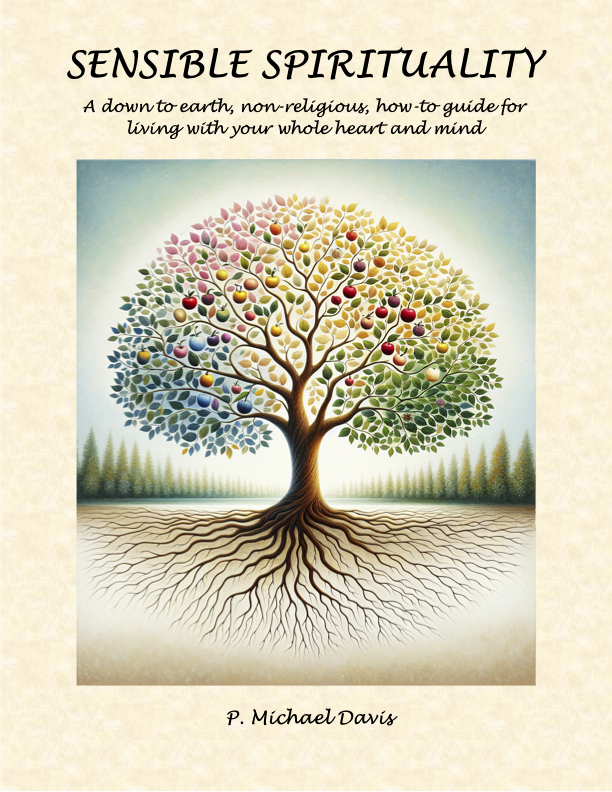
Sensible Spirituality
A down to earth, non-religious, how-to-guide for living with your whole heart and mind
While there are a multitude of books about personal development and spiritual growth, author and storyteller P. Michael Davis goes down a different path by offering a real-life conversation about how to build and maintain a positive and spiritually healthy life.
His approach is thoroughly non-religious, entertaining, and devoid of jaw clenching seriousness. He will walk you through the whys and how tos of spiritual awareness, spiritual relationship building, spiritual love, and spiritual parenting for children and adolescents.
Sensible Spirituality is available, by clicking the book cover above, in kindle, paperback, and audio book formats at Amazon.com.
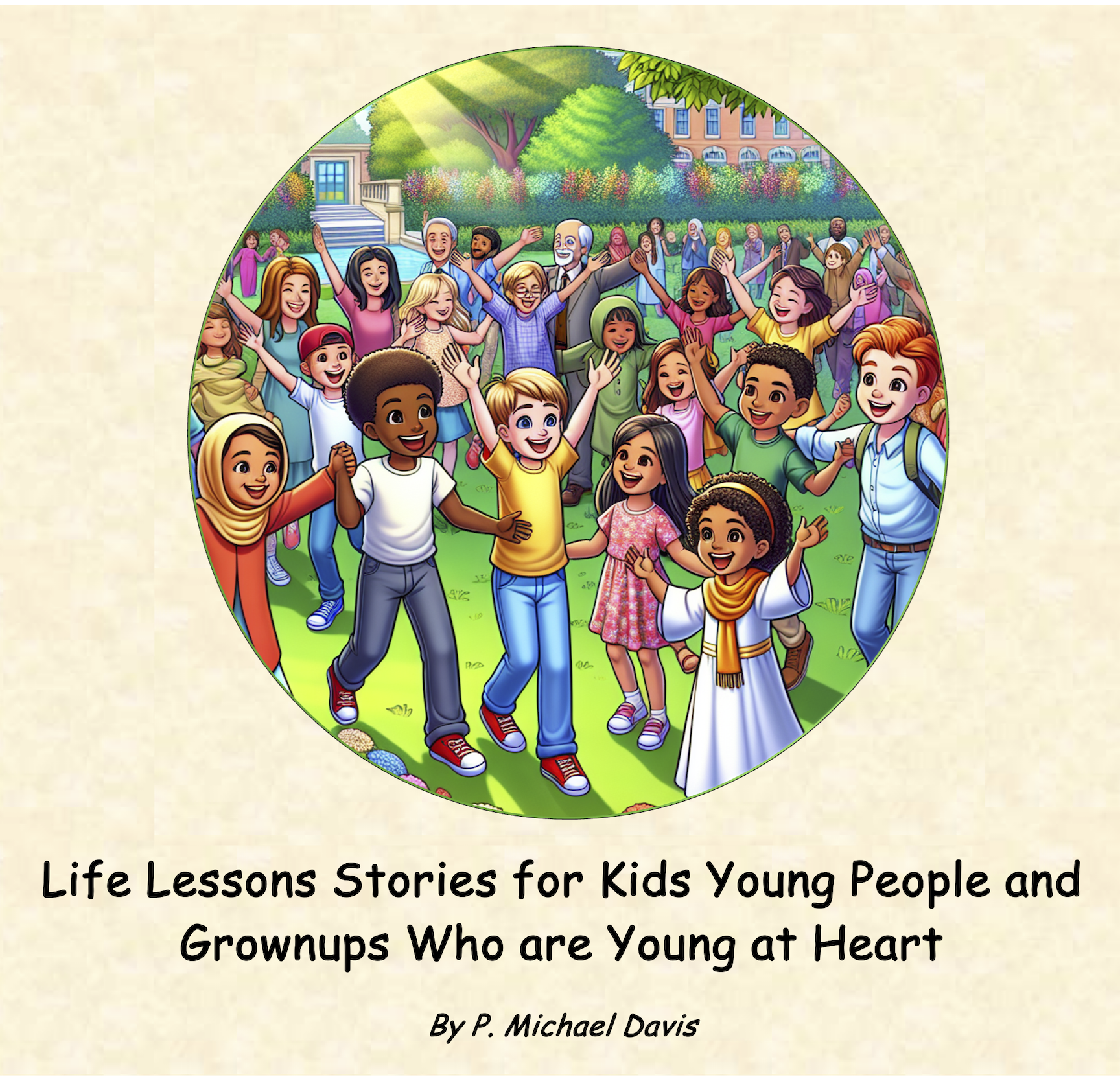
Life Lessons Stories for Kids Young People and Grownups Who are Young at Heart
By P. Michael Davis
This original collection of enjoyable, entertaining, and inspirational stories communicates positive values and principles for happy and healthy living without being preachy, teachy, or boring. By bringing an assortment of unique, interesting, and appealing characters to life in these delightful tales, P. Michael Davis opens the gate into a world where things like kindness, compassion, hope, and perseverance live and thrive. He also clearly communicates important truths about how kids, young people, and grownups can build positive relationships and live in a meaningful and fulfilling way.
Please click the image above for more info and to buy this book.